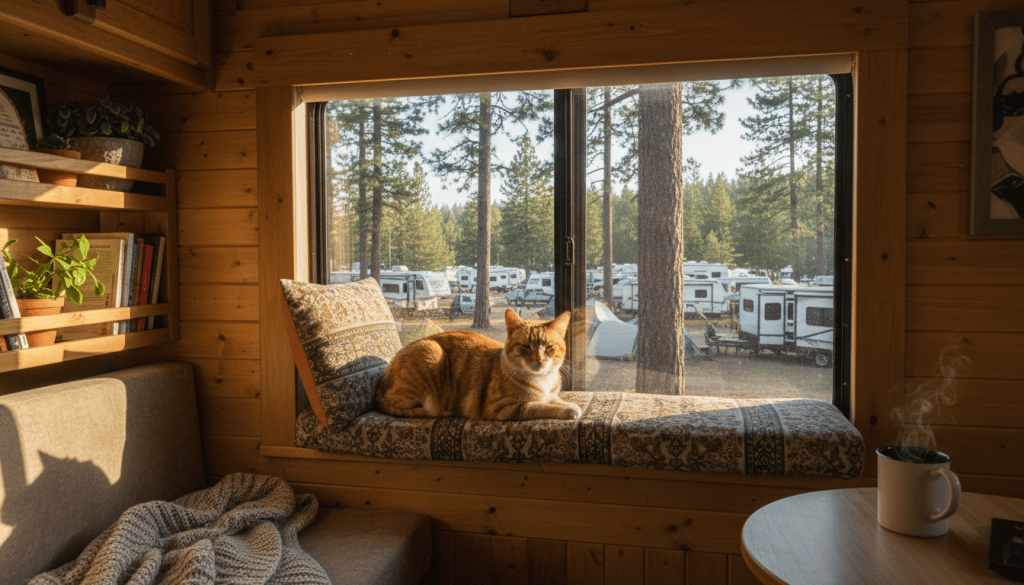

Plenty of cats adapt beautifully to RV life. The trailer becomes their territory, and since it’s the same space every night, many cats settle in faster than owners expect. The key is setting the trailer up with your cat’s needs in mind.
Where to put the litter box
The litter box is the biggest challenge in a small space. Popular spots include:
- The shower, if you can do without it or use campground showers
- Under the dinette or in an emptied storage cabinet with a cat-sized opening cut in the door
- A litter box furniture cabinet that doubles as a side table
A top-entry litter box cuts down on tracked litter, and a low-dust, clumping litter makes life easier in a small space. A litter mat at the exit catches the rest.
Stop escapes before they happen
A cat that slips out at a strange campground may hide for days. Make it a habit to know where your cat is before opening the door. Many RVers put their cat in the bedroom or a carrier before going in and out. Make sure your cat is microchipped and wears a breakaway collar with an ID tag.
Travel days: cats ride in the tow vehicle
Just like dogs, cats should never ride in a moving travel trailer. Use a sturdy carrier secured with a seat belt in the tow vehicle. Leave the carrier out at home for a few weeks before your first trip so it becomes a familiar, safe spot rather than a sign of a vet visit.
Give them vertical space and window views
Cats love to climb and watch. Window perches with suction cups or a small cat shelf near a window give your cat a place to watch the campground. Fasten anything tall so it can’t tip on travel days.
Consider harness training
Some cats enjoy supervised time outdoors on a harness and leash. Start indoors with short sessions and lots of treats, and use an escape-resistant harness designed for cats. Never tie a cat out unattended.
Keep food and water spill-proof
Non-skid or weighted bowls and a small pet fountain encourage drinking and stay put. Pick up bowls before travel days so nothing slides around.
Cat-friendly trailer checklist
- Litter box spot, top-entry box, and litter mat
- Secure carrier for travel days
- Breakaway collar, ID tag, and microchip
- Window perch or cat shelf
- Non-skid bowls
- Remote temperature monitor if your cat stays alone in the trailer
This post may contain affiliate links. As an Amazon Associate, we earn from qualifying purchases. This article is general information, not veterinary advice.


Leave a Reply