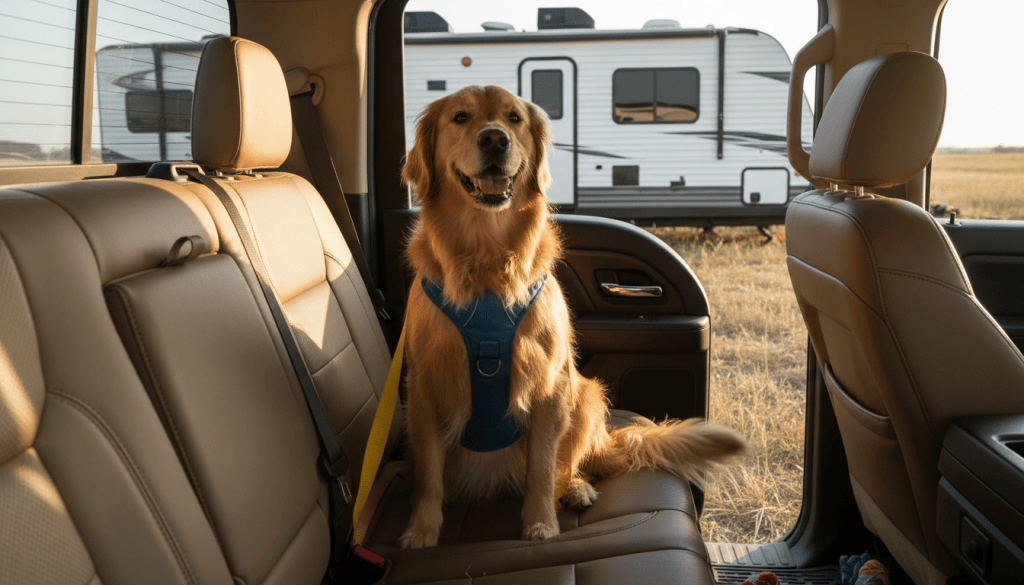

Dogs and travel trailers are a great match, but a trailer is a very different environment from a house. It moves, it heats up fast, and every campground brings new dogs, wildlife, and traffic. This guide covers the safety basics every RVing dog owner should have in place before the first trip.
Rule #1: Dogs ride in the tow vehicle, never the trailer
A towed travel trailer has no seat belts, sways on the highway, and can get dangerously hot or cold while you drive. In many states it’s also illegal for people to ride in one. Your dog should ride in the tow vehicle with you, secured in a crash-tested harness or crate.
Secure your dog in the truck
An unrestrained dog can be badly hurt in a hard stop and can distract the driver. Look for:
- A crash-tested car harness that clips into the seat belt system. Products certified by the Center for Pet Safety have passed independent crash testing.
- A travel crate strapped down in the back seat or truck bed cap area, for dogs who settle better in a den.
- A back-seat hammock cover to keep dogs from sliding into the footwell and to protect your seats.
Never leave your dog in a trailer without temperature monitoring
Trailers heat up quickly in the sun, and air conditioners can fail when campground power trips or a generator runs out of fuel. If you ever leave your dog inside, use a remote temperature monitor that alerts your phone when the trailer gets too hot or loses power. Pick one that works on cellular rather than campground Wi-Fi, which is often unreliable.
Prevent escapes at the campsite
The trailer door opens straight onto an unfamiliar place, which is when most dogs bolt. A few habits help:
- Use a screen door guard so paws don’t push through the screen.
- Set up a tie-out stake or cable sized to your dog, and check campground leash rules (most require a leash of six feet or less).
- Consider a portable exercise pen under the awning for a safe outdoor hangout.
- Keep ID tags with your cell number on the collar, and make sure the microchip is registered with current contact details.
Pack a pet first-aid kit
You may be hours from a vet. A basic kit should include gauze, vet wrap, tweezers or a tick remover, saline, a digital thermometer, and copies of vaccination records. Ask your vet what else to add for your dog, and save the numbers of emergency vets along your route.
Give your dog a familiar spot inside
A bed or crate that stays in the same place every trip gives your dog a sense of home. A washable bed that fits under the dinette or at the foot of the bed works well in tight floor plans.
Quick safety checklist
- Crash-tested harness or secured crate in the tow vehicle
- Remote temperature monitor
- Tie-out, leash, and screen door guard
- ID tags and updated microchip info
- First-aid kit and vaccination records
This post may contain affiliate links. As an Amazon Associate, we earn from qualifying purchases. This article is general information, not veterinary advice.


Leave a Reply